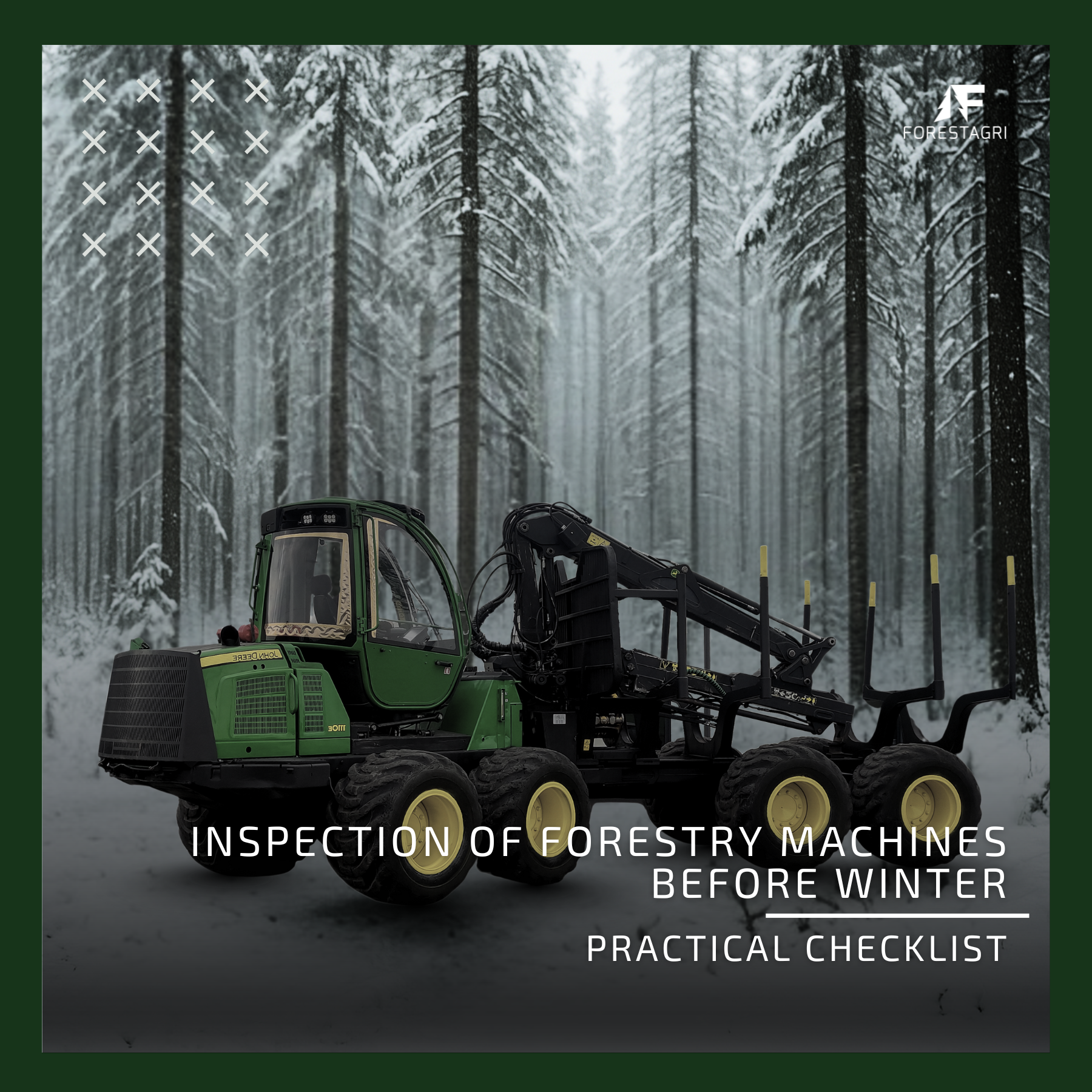


Forestry machines inspection before winter — a practical checklist
The turn of autumn and winter is the time when all the little things that were not noticeable during the summer come to the fore in machines. The temperature drops, the material becomes harder, and oils and hoses start to work differently.
Below are three key areas that every harvester or forwarder owner should check before winter. This is a simple and proven checklist to prepare your forestry machine for work.
1. Seals and hoses
In the fall, the machine operates in conditions of almost constantly high humidity. When the first frosts appear, water turning into ice acts like a wedge — it enlarges every gap and weakens the structure of the hoses.
What we pay special attention to:
- microcracks on hydraulic hoses,
- the condition of seals on cylinders, rotators, and the harvester head,
- areas exposed to high pressure — even a minimal leak can quickly grow in winter.
Why is this important?
As the temperature drops, the hoses become stiffer and minor imperfections that were previously invisible begin to show. A quick check allows you to catch problems before they turn into leaks under pressure.
2. Batteries and electrical system
Batteries are the component most affected by winter conditions. Just a few degrees below zero is enough for a weaker battery to lose a significant amount of its capacity. This is a normal physical phenomenon, but the problem starts when the battery is already quite old.
During the inspection, we perform:
- resting voltage measurement and load test,
- quality control of connections, terminals, and clamps (oxidation = poorer current flow),
- inspection of wires and plugs exposed to autumn moisture.
The result of the inspection?
The machine starts without any problems, even at low temperatures. In winter, an “almost” functional battery is not enough — what counts is one that ensures a reliable start.
3. Hydraulic system
The hydraulic system is the heart of the machine. Its operation in low temperatures differs from that in the summer season — the oil thickens and filtration becomes less efficient. If the system is slightly contaminated or has an old filter, you can immediately feel the difference in the operation of the entire machine.
When preparing for the winter season, we check:
- the condition and cleanliness of the filters,
- the oil level and its viscosity (sometimes it is worth considering an oil change),
Why is it worth checking?
In winter, any resistance in the system increases component wear. Well-maintained hydraulics improve the speed of operation and the service life of components.
Autumn and early winter are the best times to do a quick check and fix things that usually go unnoticed. This approach allows you to make minor adjustments right away, rather than reacting only when the machine breaks down.